
Coffee, how to choose it and make it

The 2009 Paris Agricultural Fair recently closed after having received over 700,000 visitors.
This year, I was invited by AVPA in order to represent the gastronomic side for those 3 products : seed oils, olive oil and coffee.
AVPA (Agence pour la Valorisation des Produits Agricoles) is chaired by Mr Philippe Juglar and aims to target high quality products and help their production.
One after the other, profesionals of the coffee business came on stage to introduce their jobs and their products, including two outstandings producers from Gabon and from Togo.
Thereafter, one came and talked about what caffeine brings into daily life and its side effects.
Then it was my turn to explain what coffee brings into cooking. At the end of my speech and out of the stage, I met Mr Rocher who, during 37 years, travelled all around the world to look for the best coffee beans : he tasted up to 200 coffees a day and discovered wonders in Ethiopia for instance.
This enquiry minding man, full of passion, has worked during all those years for the greatest coffee brands.
We warmlly thank this exceptional fellow for being our "coffee consultant" on this web site and being open to answer any questions from our visitors from this address :
Your questions about coffee
Patrick Asfaux.
This year, I was invited by AVPA in order to represent the gastronomic side for those 3 products : seed oils, olive oil and coffee.
AVPA (Agence pour la Valorisation des Produits Agricoles) is chaired by Mr Philippe Juglar and aims to target high quality products and help their production.
One after the other, profesionals of the coffee business came on stage to introduce their jobs and their products, including two outstandings producers from Gabon and from Togo.
Thereafter, one came and talked about what caffeine brings into daily life and its side effects.
Then it was my turn to explain what coffee brings into cooking. At the end of my speech and out of the stage, I met Mr Rocher who, during 37 years, travelled all around the world to look for the best coffee beans : he tasted up to 200 coffees a day and discovered wonders in Ethiopia for instance.
This enquiry minding man, full of passion, has worked during all those years for the greatest coffee brands.
We warmlly thank this exceptional fellow for being our "coffee consultant" on this web site and being open to answer any questions from our visitors from this address :
Your questions about coffee
Patrick Asfaux.
Arabica coffee:
Features : light strength. Acidity is +/- strong. Mild, sweet.
Aromas are : present, reasonably strong, intense, fine , eventually fruity
Original from Abyssiny (Ethiopia) where it grows naturally on high level plateux (1,400 to 2,200 yards altitude). Makes approx. 70% of the coffee production, it grows under quite cool tropical climate, always above freezing point, between the 2 tropics, like on the East African plateaux where it comes from originally, on the volcanic earths of Central America, on the slopes of the Andic mountains in South America and in Asia where it finds an idela temperature between 59 and 75°F all year long.
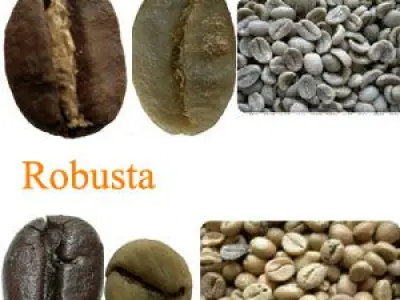
Robusta coffee:
Features : Strenght and bitterness +/- present. No acidity.
Aromas are : Present, +/-strong, quite ordinary.
Discovered in Africa in a valley of Congo by the end of the XIXth century. This coffee prefers hot and humid equatorial zones and is grown in a large number of countries where arabica cannot growth successfully. Robusta is mainly used for its productivity, hardiness and resistance. One can find Robusta mainly in Africa, Madagascar, Asia and South Africa (Brazil).
More resistant to parasitical organisms and deseases than Arabica, more productive and for a lower cost, Robusta has 3 advantages on Arabica for the coffee producers. Disadvantage of Robusta vs Aribica is is low aroma and taste value.
Geat Coffee "Vintages"
There are great coffees like there are great wines but it is hard to tell which one is the best. There is no �king coffee� because they all have different fragrances and tastes. Not one can dominate the others. We can name tens of �grands crus� (vintages) : they all grow at high altitude, on volcanic earths and under the shade, where coffee beans mature much slower. Coffee beans are heavier and have a greenish blue colour. Coffee varieties are often old one, offering low yield but high quality.
A few appelations
ETHIOPIA : Sidamo, Tepi, Limu , Yergacheffe, Harrar, Gimbi lekempti, Shoa, Djimmah.. COLOMBIA : Popayan, Huila, Medellin, Armenia, Narino, Antioquia, Santa Marta... KENYA : AA, Kitale,Thika, Pino, Rafiki, Tina
PANAMA : Geisha, NEW GUINEA: Tagari, Sigri, Plantations,Arona, Gumanch, Purosa,
GUATEMALA : Antigua, Tres marias, Coban, huehuetenango,San marcos,Atitlan... COSTA RICA : Tarrazu, Montebello, Tournon, Tres Volcanes, Tres Rios, Heredia ,Juan vinas Alajuela ,Paraiso
MEXICO : Guatepec Altura, Tapachula, Pluma, Izapa, Xtapa,Oaxaca, Vera Cruz, Liquidambar MS
BRASIL : Bahia, Sul de Minas, Mogiana, Cerrado, Araraquarence.
BURUNDI : Fully Washed- Extra- Super: Buyendi, Kirimiro,Mumirwa
CHINA: Yunnan -Simao et Baoshan...
HAWAI : Kona Extra Fancy
HONDURAS : Santa Rosa, Santa Barbara , La Paz...
INDONESIA: Kalosi, Sumatra Mandheling,Timor, Celebes Sulawesi Macassar
MALAWI : Grade 1 Chitipa, Rhumpi, Blantyre,Machinga
NICARAGUA: Jinotega, Matagalpa JAMAICA : Blue Moutain
Features : light strength. Acidity is +/- strong. Mild, sweet.
Aromas are : present, reasonably strong, intense, fine , eventually fruity
Original from Abyssiny (Ethiopia) where it grows naturally on high level plateux (1,400 to 2,200 yards altitude). Makes approx. 70% of the coffee production, it grows under quite cool tropical climate, always above freezing point, between the 2 tropics, like on the East African plateaux where it comes from originally, on the volcanic earths of Central America, on the slopes of the Andic mountains in South America and in Asia where it finds an idela temperature between 59 and 75°F all year long.
Robusta coffee:
Features : Strenght and bitterness +/- present. No acidity.
Aromas are : Present, +/-strong, quite ordinary.
Discovered in Africa in a valley of Congo by the end of the XIXth century. This coffee prefers hot and humid equatorial zones and is grown in a large number of countries where arabica cannot growth successfully. Robusta is mainly used for its productivity, hardiness and resistance. One can find Robusta mainly in Africa, Madagascar, Asia and South Africa (Brazil).
More resistant to parasitical organisms and deseases than Arabica, more productive and for a lower cost, Robusta has 3 advantages on Arabica for the coffee producers. Disadvantage of Robusta vs Aribica is is low aroma and taste value.
Geat Coffee "Vintages"
There are great coffees like there are great wines but it is hard to tell which one is the best. There is no �king coffee� because they all have different fragrances and tastes. Not one can dominate the others. We can name tens of �grands crus� (vintages) : they all grow at high altitude, on volcanic earths and under the shade, where coffee beans mature much slower. Coffee beans are heavier and have a greenish blue colour. Coffee varieties are often old one, offering low yield but high quality.
A few appelations
ETHIOPIA : Sidamo, Tepi, Limu , Yergacheffe, Harrar, Gimbi lekempti, Shoa, Djimmah.. COLOMBIA : Popayan, Huila, Medellin, Armenia, Narino, Antioquia, Santa Marta... KENYA : AA, Kitale,Thika, Pino, Rafiki, Tina
PANAMA : Geisha, NEW GUINEA: Tagari, Sigri, Plantations,Arona, Gumanch, Purosa,
GUATEMALA : Antigua, Tres marias, Coban, huehuetenango,San marcos,Atitlan... COSTA RICA : Tarrazu, Montebello, Tournon, Tres Volcanes, Tres Rios, Heredia ,Juan vinas Alajuela ,Paraiso
MEXICO : Guatepec Altura, Tapachula, Pluma, Izapa, Xtapa,Oaxaca, Vera Cruz, Liquidambar MS
BRASIL : Bahia, Sul de Minas, Mogiana, Cerrado, Araraquarence.
BURUNDI : Fully Washed- Extra- Super: Buyendi, Kirimiro,Mumirwa
CHINA: Yunnan -Simao et Baoshan...
HAWAI : Kona Extra Fancy
HONDURAS : Santa Rosa, Santa Barbara , La Paz...
INDONESIA: Kalosi, Sumatra Mandheling,Timor, Celebes Sulawesi Macassar
MALAWI : Grade 1 Chitipa, Rhumpi, Blantyre,Machinga
NICARAGUA: Jinotega, Matagalpa JAMAICA : Blue Moutain
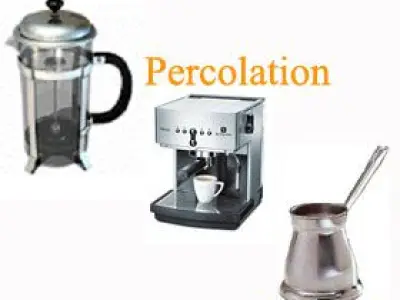
How to prepare a coffee ?
There are 3 methods : infusion, percolation and Oriental (Turkish) method., but we can find number of different machines and systems : manual, electric and electronic, all different giving, according to multiple preparation parameters, vary different coffee outputs.
Infusion : a given quantity of grounded coffee is poured into an infusion pot made of glass or china and equipped with a lid. We pour boiling water onto the coffee in an appropriate proportion, we stir with a spoon just before covering the pot. After a few minute infusion, the coffee is ready for either analysis or drinking.
In order to ease the preparation of this infusion, we can find piston coffe makers also called "french presses" : 5 minutes after the infusion is made, we must push the piston downwards to filter coffee powder from the liquid that become clean and ready for tasting.
Percolation : the word comes from the Latin «Percolare» meaning «to filter» ; percolation is therefore a filtration. All percolation systems include a paper or plastic filter like in the electric coffee makers (we call this sytem percolation by gravity") or a metal filter used in expresso machines using steam under high pressure or an elcetronic pump or other systems by filtration.
Oriental (or Turkissh)Method orientale : different from the two other ones and one of the oldest ways to prepare coffee.
The coffee pot to be used differ according to the countries (Greece, Turkey, etc...) but the mostly used is called Ibrik or Briqui or Cveze and is made of brass or copper and is wide-mouthed. We pour very fine grounded coffee (impalpable powded), then sugar then cold water, each of the ingredients in the same proportion (one teaspoonfull of each for one cup of coffee). Then we put the Ibrik on the hob and let the whole boiling. When the frost goes up to the top of the Ibrik, we take the Ibrik out of the hob to let the frost going down and rest during a few seconds, we stir with a spoonthen we put it again of the hob etc.. we repeat this sequence of actions twice or more times. In Syria and in Lebanon, they add a little bergamot (sign of whealth).
What kind of water should be used ?
Coffee prefers neutral Ph waters, not too hard and little mineral. When we drink a coffee, we do not think about the influence of the water that is used but this is very important.
spring waters: little mineral, we can find excellent spring waters for making coffee but the only problem is there quality can fluctuate.
mineral waters: natural mineral waters are stable but we must choose one that is not too much mineral/hard.
tap waters: between 15°F (soft)and 35°F (hard) degredd of hardness. Those waters are fine for coffee provided that their hardness degree stays in an acceptable soft water range and that they are free of an unpleasant chlorine taste.
waters from household water softeners ménagers: those devices replace calcium and magnesium ions by sodieum ions. Generally, such waters are not good for coffee because a significant part of the aroma is lost.
Where to store coffee ?
Ennemies of coffee are heat, humidity, oxygen and light.
For a weekly consumption, choose to store your coffee in the fridge : this is the ideal place, whatever the season is.
For a longer conservation, even if the coffee package has been open, keep it in the deep freezer that will keep even better during a long period all the coffee qualities.
read the following part of this report next month :
There are 3 methods : infusion, percolation and Oriental (Turkish) method., but we can find number of different machines and systems : manual, electric and electronic, all different giving, according to multiple preparation parameters, vary different coffee outputs.
Infusion : a given quantity of grounded coffee is poured into an infusion pot made of glass or china and equipped with a lid. We pour boiling water onto the coffee in an appropriate proportion, we stir with a spoon just before covering the pot. After a few minute infusion, the coffee is ready for either analysis or drinking.
In order to ease the preparation of this infusion, we can find piston coffe makers also called "french presses" : 5 minutes after the infusion is made, we must push the piston downwards to filter coffee powder from the liquid that become clean and ready for tasting.
Percolation : the word comes from the Latin «Percolare» meaning «to filter» ; percolation is therefore a filtration. All percolation systems include a paper or plastic filter like in the electric coffee makers (we call this sytem percolation by gravity") or a metal filter used in expresso machines using steam under high pressure or an elcetronic pump or other systems by filtration.
Oriental (or Turkissh)Method orientale : different from the two other ones and one of the oldest ways to prepare coffee.
The coffee pot to be used differ according to the countries (Greece, Turkey, etc...) but the mostly used is called Ibrik or Briqui or Cveze and is made of brass or copper and is wide-mouthed. We pour very fine grounded coffee (impalpable powded), then sugar then cold water, each of the ingredients in the same proportion (one teaspoonfull of each for one cup of coffee). Then we put the Ibrik on the hob and let the whole boiling. When the frost goes up to the top of the Ibrik, we take the Ibrik out of the hob to let the frost going down and rest during a few seconds, we stir with a spoonthen we put it again of the hob etc.. we repeat this sequence of actions twice or more times. In Syria and in Lebanon, they add a little bergamot (sign of whealth).
What kind of water should be used ?
Coffee prefers neutral Ph waters, not too hard and little mineral. When we drink a coffee, we do not think about the influence of the water that is used but this is very important.
spring waters: little mineral, we can find excellent spring waters for making coffee but the only problem is there quality can fluctuate.
mineral waters: natural mineral waters are stable but we must choose one that is not too much mineral/hard.
tap waters: between 15°F (soft)and 35°F (hard) degredd of hardness. Those waters are fine for coffee provided that their hardness degree stays in an acceptable soft water range and that they are free of an unpleasant chlorine taste.
waters from household water softeners ménagers: those devices replace calcium and magnesium ions by sodieum ions. Generally, such waters are not good for coffee because a significant part of the aroma is lost.
Where to store coffee ?
Ennemies of coffee are heat, humidity, oxygen and light.
For a weekly consumption, choose to store your coffee in the fridge : this is the ideal place, whatever the season is.
For a longer conservation, even if the coffee package has been open, keep it in the deep freezer that will keep even better during a long period all the coffee qualities.
read the following part of this report next month :
Comments (9)
Bonjour Evy,
Lorsqu'on évoque les grands crus, ce sont les cafés des pays producteurs qu'il s'agit.
Les cafés italiens comme ceux des autres pays de l'Europe sont élaborés quelquefois à partir de ces grands crus d'Amérique, d'Afrique ou d'Asie ou à partir de qualités inférieures (mainstream ou qualité courante).C'est ensuite le savoir faire qui fera la notoriété du pays consommateur, comme par exemple le mélange des origines, sa torréfaction, son mode de préparation etc.
En Italie les cafés sont torréfiés assez foncés, moulus finement et préparés le plus souvent par percolation à pression de vapeur par le consommateur, ces éléments renforcent l'extraction et donnent au gout un café puissant souvent sans amertume , mais ce ne sont pas forcément les meilleurs crus de cafés qui sont utilisés, c'est le savoir faire adapté à leur coutume de consommation.
Contrairement à la croyance , les meilleurs cafés sont exportés puis consommés en Allemagne et en Scandinavie, par contre la torréfaction est très légère et au niveau de la tasse, la force est légère, l'acidité bien présente et l'arome un peu insuffisamment développé(vert) pour le gout français et méditerranéen. J'espère que ma réponse vous satisfera !
Dégustateur André ROCHER
Je ne conçois pas le prendre "sur le pouce" comme beaucoup d'Européens, je préfère une ambiance calme tout en regardant quelque chose de beau (une rose, un paysage...). C'est presque une méditation!
La percolation a souvent été attribuée au système expresso (express et pression) que l'on surnomme plutôt percolateur mais l'étymologie de ce mot percolation vient du latin percolare et signifie fitration. Il existe la percolation à pression de vapeur, Moka en Italie et Espagne (le + connu est le système Bialetti), la percolation par centrifugation, la percolation par expresso, la cafetière électrique…
La cafetière électrique est de « la percolation sans pression par gravité » mais c'est aussi de la lixiviation car d'une certaine façon on "lessive" le café.
C'est pour cela que le mot percolateur est un peu équivoque , et il est vrai que pour le consommateur , le percolateur c'est la machine expresso
L'AVPA permettait aux visiteurs du Salon de l'Agriculture d'explorer la diversité des goûts des cafés, avec des cafés présentés par ses producteurs membres. Pérou, Honduras, Cameroun, République Centrafricaine, et d'autres origines avaient envoyé leurs cafés.
Leave a comment