
Queen Tomato's paradise

Most people believe that tomato is a vegetable but it is actually a fruit of an herbal american plant (solanum genus) ; its name comes from the Spanish «tomata» itself from the aztec «tomatl».
Introduced into Europe more than 2 centuries ago, tomato has become a major element of our food, mainly due to the Mediterranean cooking genius who made tomato become a major cooking basis.
We had been invited, thanks to the famous glassware preserve pot manufacturer «Le Parfait», by Mrs de Roquefeuil manager of the castle of La Bourdaisière to celebrate, from 12th to13th September 2009 the 11th Tomato Festival.
Introduced into Europe more than 2 centuries ago, tomato has become a major element of our food, mainly due to the Mediterranean cooking genius who made tomato become a major cooking basis.
We had been invited, thanks to the famous glassware preserve pot manufacturer «Le Parfait», by Mrs de Roquefeuil manager of the castle of La Bourdaisière to celebrate, from 12th to13th September 2009 the 11th Tomato Festival.
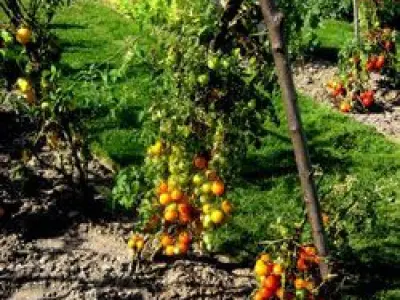
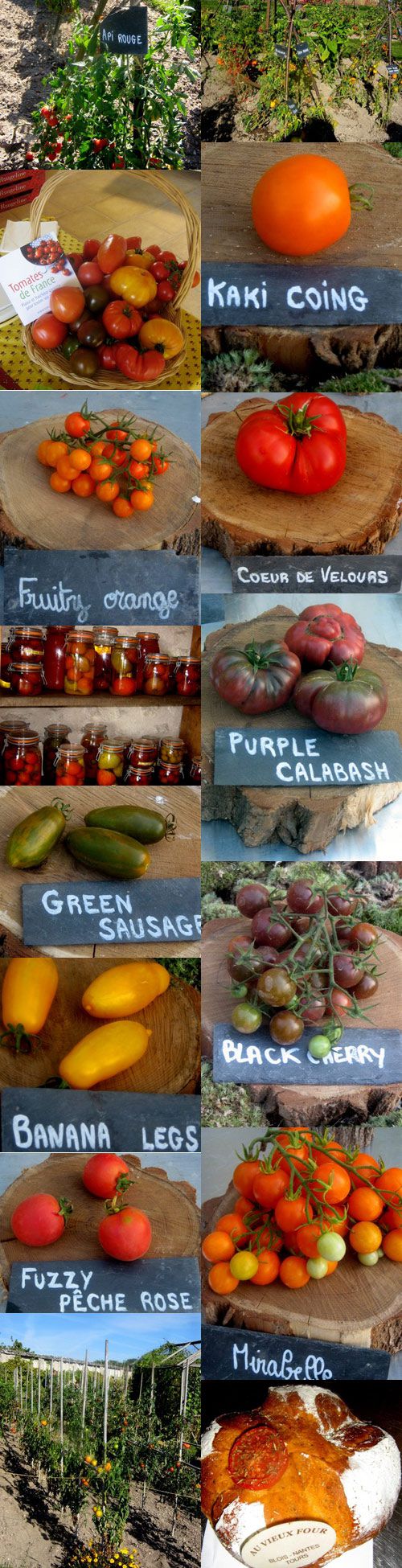
Indeed, this is in this marvellous castle that Louis Albert de Broglie, the great traveller, brought back from India and Asia and from visits of many botanic gardens all over the world, sometimes seed of very rare tomato species. In 1995, the conservatory was founded in this exceptional place in order to grow 630 different species of tomatoes brought into the French territory by our erudite traveller. We spent there a wonderful day.
The visit of this site was exceptional in all points and like �out of the time� because �Lady Tomato� was not only there everywhere in this large vegetable garden but also all around in the small shops installed here and there in order to sell the seeds of these forgotten species, perfumes or other cosmetic products and also wonderful breads and pastries all more original than the others.
In short, I strongly suggest you go there next year, by mid-september 2010 to make this magical journey. Like me, I am sure you will be amazed by the extraordinary vegetal heritage our country can still offer and that we all must protect.
*Actually 5,000 persons on 2 days last year !!!
The visit of this site was exceptional in all points and like �out of the time� because �Lady Tomato� was not only there everywhere in this large vegetable garden but also all around in the small shops installed here and there in order to sell the seeds of these forgotten species, perfumes or other cosmetic products and also wonderful breads and pastries all more original than the others.
In short, I strongly suggest you go there next year, by mid-september 2010 to make this magical journey. Like me, I am sure you will be amazed by the extraordinary vegetal heritage our country can still offer and that we all must protect.
*Actually 5,000 persons on 2 days last year !!!
A few recipes :
>> Confit Tomatoes
>> Tomato Soup
>> Stuffed Tomatoes
>> Genuine Tomato Sauce
A few addresses :
Mrs Martine de Roquefeuil
Château de la Bourdaisière
37270 Montlouis-sur-Loire
+33 02 47 45 16 31
Mr Jacques Mahou
Bio baker Bio
(trademark : Au vieux Four)
22 avenue Maginot
37000Tours
+33 02 47 41 71 71
Restaurant « Les Saveurs »
1 place Gaston Pailhou (place des halles)
37000 Tours
+33 02 47 37 03 13
Hôtel Logis de France
des Châteaux de la Loire
12 Rue Gambetta
37000 Tours
+33 02 47 05 10 05
Comments (7)
Mais un ami qui est allé l'année dernière nous en a fait goûter? il n'y a pas très longtemps deux sortes dont une absolument délicieuse et superbe, c'est la tomate ananas ; coupée en tranches on dirait de l'ananas, sucrée et tout et tout.
Enfin, vous allez dire que je fais une fixation sur les tomates. Mais en hiver c'est pas la peine ...
Voilà, voilà, à bientôt
Pour les amateurs, d'autres recettes sont sur le site, dont celle des tomates farcies aux crevettes et celle des tomates à la provençale
Le terme « tomate » vient de l'espagnol tomate, lui-même emprunté au nahuatl (langue de la famille uto-aztèque) tomatl qui désignait le fruit de la tomatille (Physalis ixocarpa). En revanche le mot nahuatl xictomatl (espagnol mexicain : jitomate) désigne la tomate (Lycopersicon esculentum . La première attestation de « tomate » en français date de 1598 dans la traduction de l'ouvrage de José de Acosta, Historia natural y moral de las Indias, par Robert Regnault « Tomate » n'est entré dans le dictionnaire de l'Académie française qu'en 1835, le fruit s'est longtemps appelé « pomme d'amour » ou « pomme d'or ».
Le nom de la tomate figure dans les « mots sans frontières » recensés par Sergio Corrêa da Costa. On le retrouve en effet dans de nombreuses langues avec de faibles variations phonétiques et orthographiques. On a ainsi dans les langues européennes : tomato en anglais, tomate en allemand, espagnol, français et portugais, tomat en danois, norvégien, suédois et estonien, tomaat en néerlandais, à l'exception notable de l'italien pomodoro.
bonjour à toutes et a tous
On en apprend tout les jours.
Et de la tomate on en mange tout les jours
vos désirs sont des ordres ! Je viens d'ajouter quelques grands classiques revisités par le Chef Patrick.
Leave a comment