Rhubarb tart Recipes - AFTouch-Cuisine
Ah, rhubarb! This singular plant that our grandmothers called "the devil's rhubarb" because it sticks its tongue out at you with its formidable sourness. And yet, it is precisely this liveliness, this rather rebellious personality, that makes it an unsung hero of pastry-making. The tarte à la rhubarbe is one of those culinary creations that seems simple at first glance, but actually conceals a genuine alchemy between sugar, acidity, and technique.
Let's go back a bit in history: rhubarb arrived in Europe in the Middle Ages, straight from China and Central Asia. Europeans didn't know what to do with it at first! It wasn't until the nineteenth century that someone had the brilliant idea of cooking its stalks with sugar, and since then, it has never stopped charming bakers and pastry chefs. The English, in particular, love it so much that they've cultivated it in their finest gardens. Rhubarb was there, patient, waiting for someone to discover it was made for tarts.
What fascinates with rhubarb is its duality. Its tart flavor demands perfect balance: too little sugar and your tart looks like a remedy for indigestion; too much sugar and you lose that singular character that makes it unforgettable. It's a bit like dancing the tango with a demanding partner. But when everything aligns, when the crispy pastry cracks between your teeth, when the silky cream embraces the pieces of rosy rhubarb, that's magic. Pure and simple.
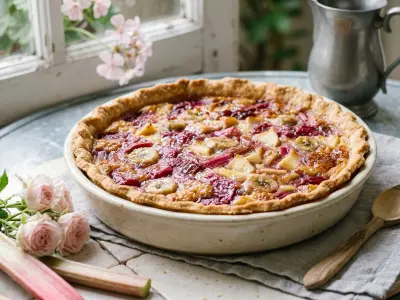
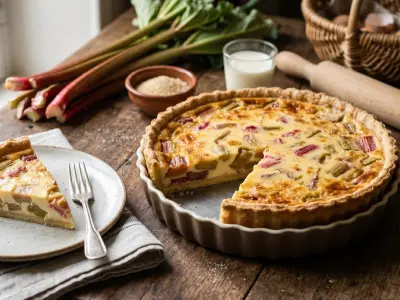
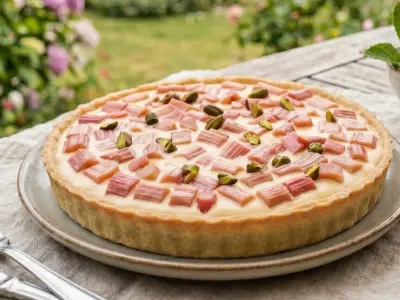
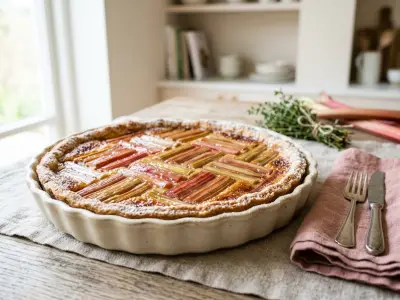
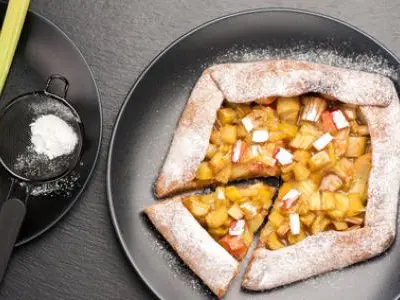
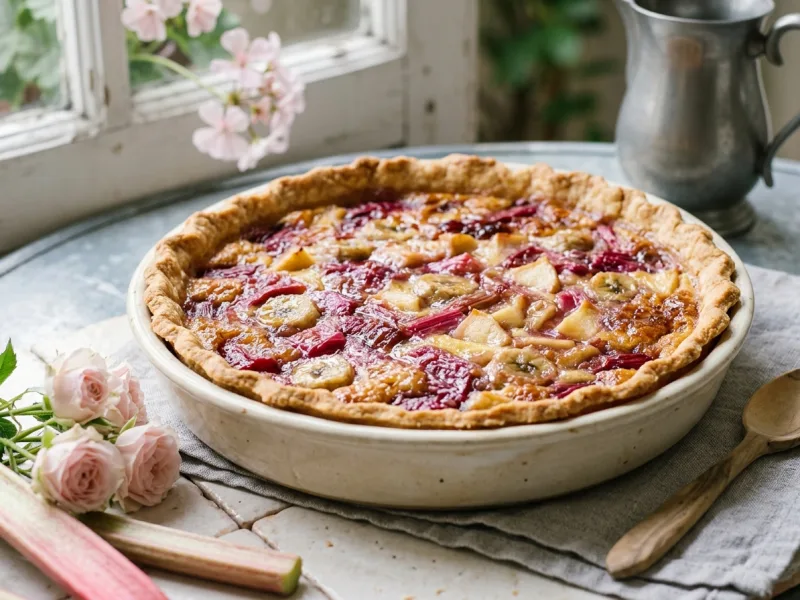
Our recipes on AFTouch-Cuisine offer you several approaches to taming this beautiful rebel. The Tarte à la rhubarbe à la crème is the classic expression, timeless. But if you're in a creative mood, why not explore the Tarte gourmande rhubarbe banane et pomme, which plays with contrasts of flavors and textures? For those seeking something more voluptuous, the Tarte rhubarbe mascarpone offers a richness that wraps the sourness of rhubarb in a true embrace.
And since we're talking about balance, Fleur reminds us of an excellent lesson in her comment on the tartelettes à la crème brûlée: you don't always have to boil the cream, and sometimes the simplest tricks are the best ones. This philosophy holds true for rhubarb as well. Not overloading, letting the rhubarb speak for itself, that's often the secret.
Still hesitating? Try the Tarte aux fraises des bois as a starting point if you're new to pastry-making, then progress to rhubarb when you feel ready. Rhubarb isn't just a simple recipe: it's an invitation to rethink your relationship with sugar, acidity, and sparkling colors on your plate.
Now, grab your tart server!