



The day before, marinate
1 Remove the veins from your foie gras.
2 In a dish, place your lobes, add the salt, pepper, sugar and alcohol. Mix well, cover with cling film and refrigerate for 24 hours. You can turn the lobes from time to time so they absorb the marinade well.
The next day
3 Preheat your oven to 150 °C (gas mark 5).
4 At the bottom of your porcelain terrine, place the larger lobe skin side down, then layer the remaining lobes in a brick pattern, head to tail, pressing down to avoid gaps between the lobes until it reaches the top. Smooth with an iron spatula and adjust the lid.
5 Pour very hot water and fill a baking tray on which you've placed a folded sheet of newspaper at the bottom, this prevents boiling. Place the terrine so it sits one third submerged in water.
6 After 40 minutes, check and monitor the cooking. When the fat has covered the foie gras, it will be ready.
7 Place your terrine directly in a basin filled with ice cubes and cold water so it's submerged three quarters of the way for 20 minutes, this will stop the cooking of your foie gras and it will release less fat. If you have a small board the right size, place it on your foie gras with a light weight on top to apply pressure and allow the fat to rise back up.
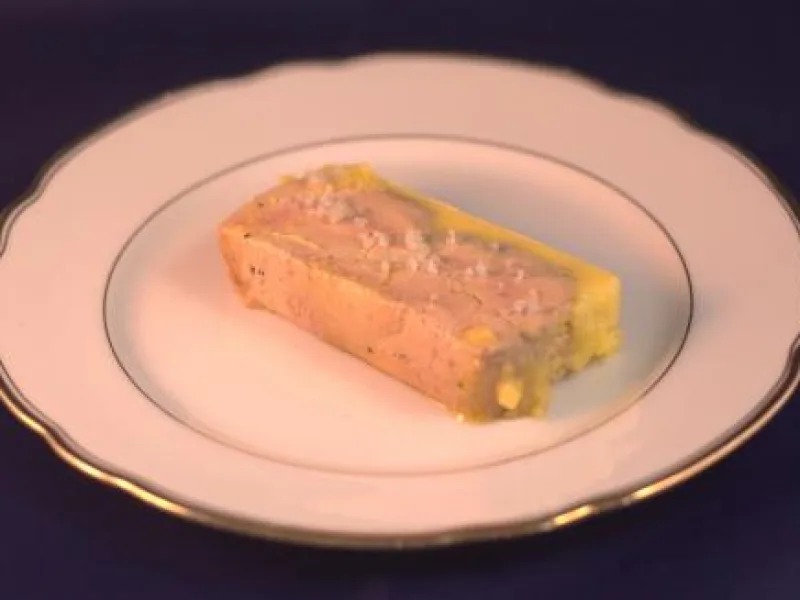
8 Wipe your terrine and put it in the fridge with the small board still on top. Remove it before the fat hardens.
9 You can start enjoying your foie gras terrine 72 hours later, minimum, so the flavors can meld together. Don't forget to wrap it with cling film each time you cut a slice and return the terrine to the fridge. You can keep your semi-cooked foie gras terrine a maximum of two weeks in your fridge at minimum 4 °C, as long as it hasn't been opened. If you see some traces of blood, soak your foie gras in ice-cold water or milk.
Leave a comment
Share a tip, your experience, or ask a question to the community.