
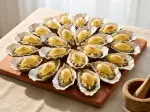
1 In a saucepan, melt the butter then add the endives in julienne, salt, sugar, lemon juice and four spices. Cover and cook gently over low heat for 30 minutes.
2 Meanwhile, open your oysters, discard the first liquid then let them release their second liquid. Detach them from their shells, pour them into a bowl, clean the shells and keep them.
3 Bring your Barsac* to a boil and add freshly ground pepper. When it reaches boiling point, plunge your oysters and their released juice for 10 seconds then remove them with a skimmer (drain) onto a plate.
4 Reduce the wine by half then let it cool to room temperature.
5 Prepare an oven-safe plate with a good thickness of coarse salt so that your shells stay balanced horizontally.
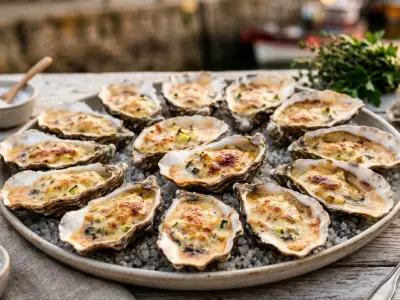
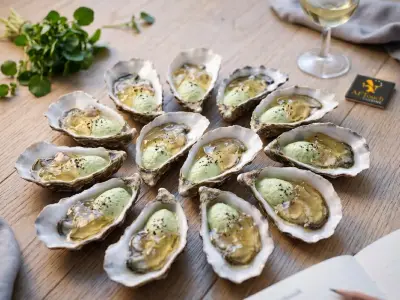
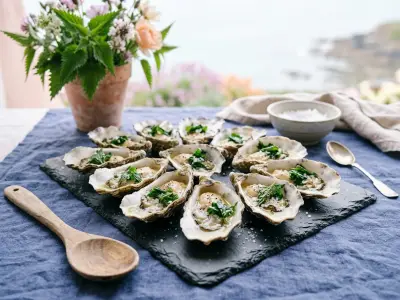
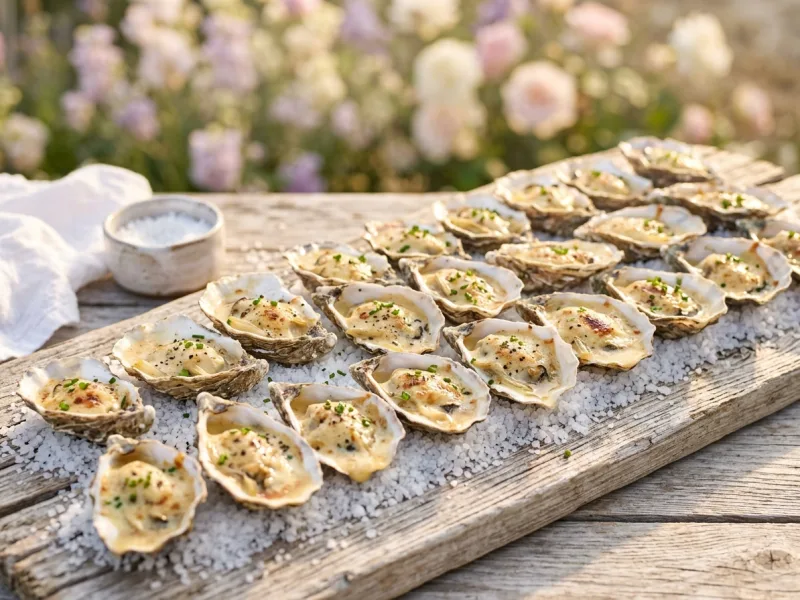
6 Arrange your 24 shells on the plate and in each one, place a spoonful of candied endives, then add a poached oyster on top.
7 Make the sabayon : over heat, over a double boiler, in a saucepan pour the reduced Barsac and your 6 egg yolks. Then with a whisk, beat this mixture with a whisk until it reaches the consistency of a cream. Remove your saucepan from the double boiler and immediately add the cream, salt lightly and pepper.
8 Turn your oven on to broil setting.
9 Then using a soup spoon, coat each oyster with sabayon, put the plate in the oven. 2 to 3 minutes will be enough for them to be nicely colored.
10 To serve : on each plate, place small piles of coarse salt so that the oysters stay horizontal.
11 Serve with a small glass of the wine used to make the recipe.
Chef's Note : You'll see that in most recipes, when poaching oysters, many of my colleagues often use the first liquid. For my part, I find that fine de claire is already quite iodized and since I've had comments from time to time about the sauce being too salty, even though I hadn't salted it, I prefer to share my experience. That is, to use only the second liquid released so that your recipe will turn out perfectly.
Help other cooks
Share a tip, your adaptation, your result. Every comment counts.