1 Put your white beans in a pot with the carrot mirepoix, the small onions, garlic clove, thyme and bay leaf. Pour in 2.1 qt (2 litres) of water and bring to a boil.
2 As they cook, skim off any impurities. After about 20 minutes, start testing your beans. When they soften, salt them (important: don't salt before) and finish cooking.
3 Drain them, removing the bay leaf, and save some of the cooking liquid (about 0.8 cup (20 cl)).
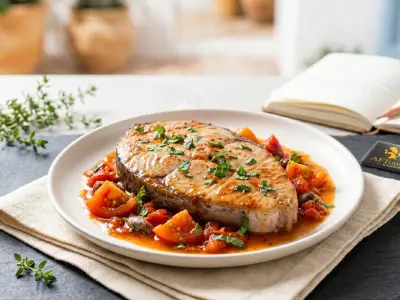
4 Fifteen minutes before serving, heat your pan with olive oil. When hot, sear your tuna fillets, season with salt and pepper, then cook 3 minutes on each side. Set the pan aside, covered.
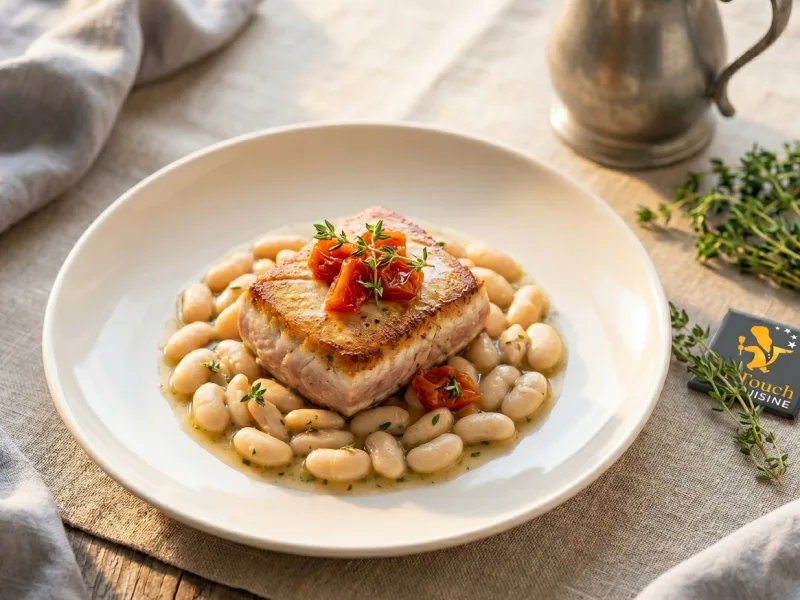
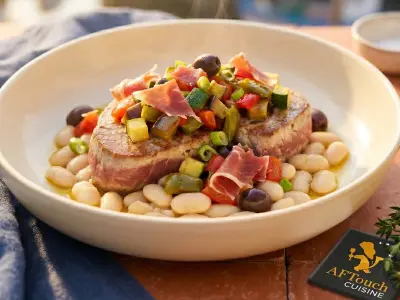
5 Remove your tuna slices to a plate. Add the remaining fish cooking liquid to the pan along with the reserved bean cooking liquid, then 1.75 oz (50 g) of roughly chopped candied tomatoes, the ketchup and a pinch of Espelette pepper. Adjust seasoning, then add the beans. Bring to a boil and place your tuna slices on top for the heat. Cover and turn off the heat.
6 To plate: on nice warm plates, put some beans first, then place the tuna slice in the centre topped with some of the remaining candied tomatoes. A beautiful "Land and Sea" dish, very typical of Breton cooking.
Paimpol beans carry the AOP (Protected Designation of Origin), one of the top honours representing French produce quality.
Line-caught albacore tuna (white tuna) comes to us from the fish market on the island of Yeu.





Help other cooks
Share a tip, your adaptation, your result. Every comment counts.