1 Prepare your pancakes. Pour the flour into a bowl, make a well in the center (fontaine), then add the eggs beaten like an omelet, salt, milk, baking powder, a squeeze of lemon juice, and the seaweed cut into tiny squares. Finish with a small spoonful of olive oil. Mix well to make a thick pancake batter, cover with a cloth, and let rest for 20 minutes.
2 Meanwhile, prepare the marinière. Slice the scallops in half horizontally and arrange six half-scallops on a plate, season with salt and pepper, add a small drizzle of olive oil and lemon juice. Cover with plastic wrap and refrigerate. Dice the remaining six scallops along with the coral (if present). In a saucepan, melt a touch of butter and cook the minced shallot for 2 minutes. Add parsley, cream, and Chablis, season with salt and pepper, and bring to a good boil. Remove from heat, add your diced scallops, turn off the heat, and let sit covered for 5 minutes. Drain through a sieve, reserving the cooking liquid.
3 Cook your pancakes. Pour a drop of oil into small blini pans (non-stick), and when hot, pour your batter to make pancakes about 1/2 cm thick. When bubbles form on the surface, flip them over and cook for another minute, then transfer to paper towels.
4 Prepare your gelled marinière. Heat half of the cooking liquid and set the rest aside in the fridge to reduce by one-third. Bring to a good boil, add the agar-agar, then return to a boil for exactly 1 minute. Pour half of this into small tartlet molds (Flexipan or similar) about 4 cm in diameter and 2 cm tall, dividing the diced scallop mixture evenly among them, then top with the remaining cooking liquid. Let cool, then refrigerate.
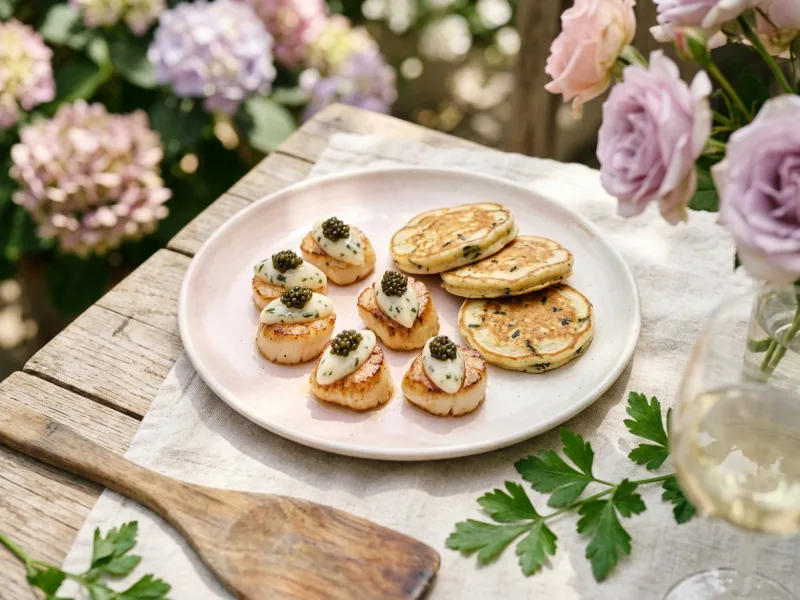
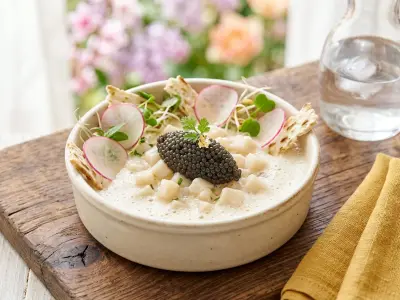
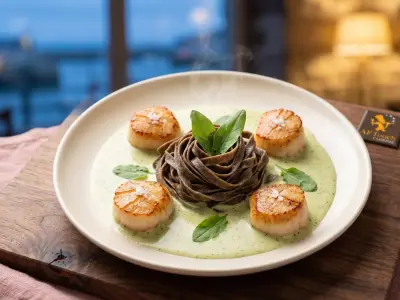
Now for tonight: Place your six plates in the fridge. 30 minutes before serving, preheat the oven to 175°F (80°C) and warm your pancakes there. To the reserved marinière, add a little very finely chopped chives. In the center of each plate, unmold your gelled marinière, top with your scallop petals, and crown with a spoonful of caviar. Remove your warm pancakes and use a pastry ring to cut a circle in the center so that the ring surrounds your preparation perfectly. Finish with a small pool of your chive cream around it, and you'll serve a plate worthy of a starred restaurant.
Yes, it's a lot of explanation for what is actually quite a straightforward recipe, but once you've made it once, it can become a classic for all your festive celebrations to come.
For this beautiful recipe, I used an exceptional Aquitaine caviar that finally earned IGP status this year. It's produced in Teich by the company « L'Esturgeonnière » run by my friend Michel Berthommier. www.caviarfrance.com



Help other cooks
Share a tip, your adaptation, your result. Every comment counts.