

Prep
25 min
Cook
140 min
Rest
1h
Total
3h45
Servings
6 serv.
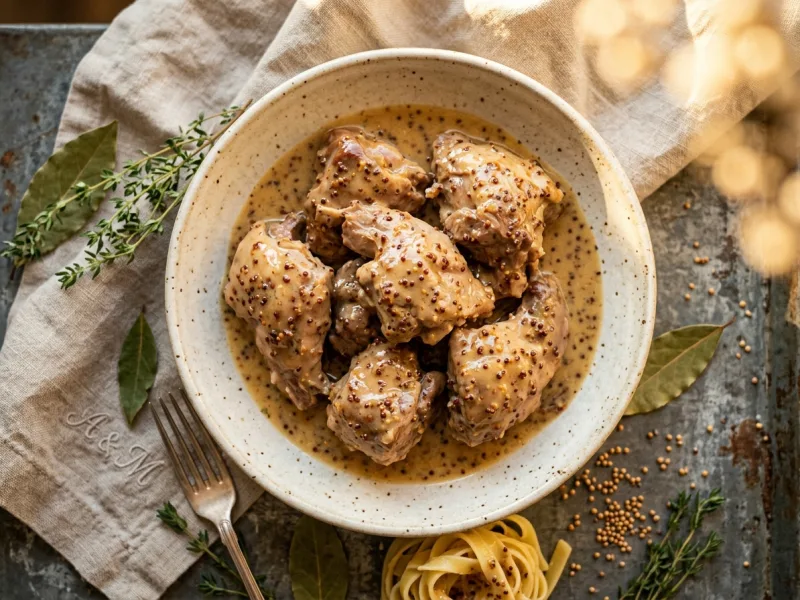
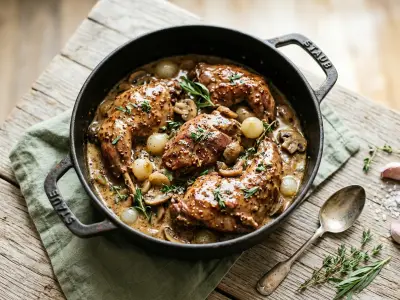
It is often said that rabbit-based dishes are not popular in restaurants and yet when tasting a good Rabbit with Mustard it always remains very good. Cook it at 210°C with generously spread Dijon mustard on the meat, then finish with cream and a touch of whole grain Meaux mustard to keep texture in the sauce. Allow 50 minutes total. The trick: coat the rabbit an hour ahead in the fridge so mustard really soaks in.
Ingredients for 6 servings
- a good Rabbit with Mustard it always remains very good.
- there are 2 main varieties of mustards Black Mustard (with pomegranate seeds) and White Mustard (with slightly orange seeds).
- Just also to point it out to a famous TV host who talked nonsense about the creation of Mustard (smiles).
- The word Mustard is a name derived from the name Must which means I quote "Mustard seed grains crushed with wine must".
- It is of very ancient use, The Latins then the Gauls loved it.
- Then in the Middle Ages it was eaten at practically every meal.
- But we had to wait until the 18th century before the Burgundian Naigeon created our Dijon mustard he prepared it by replacing the dilution with wine vinegar with that prepared with verjuice.
- at the same time Bordeaux Mustard was created where the must replaced the verjuice.
- In the 19th century this dish was called Rabbit Dijonnaise, this recipe could be prepared (I quote):
- "With either a young roof rabbit or a wild rabbit.
- Then the rabbits were just skinned, then their insides were spread with white Dijon mustard and roasted in the oven. they were removed once cooked and cut on the table."
- This recipe has evolved over time, the one I present to you is therefore a bit different
Help other cooks
Share a tip, your adaptation, your result. Every comment counts.