1- Take a large earthenware or porcelain dish, pour the semolina, moisten with a little water while breaking it up (swelling).
2- In the bottom of the couscousiere, pour 1.5 liters of water then pour the chickpeas, the meats, the spices, the washed bunches of coriander and parsley, half of the chopped onions, salt and pepper then cook at a gentle boil for 30 minutes.
3- As soon as this broth boils, put the top of the couscousiere filled with semolina on the bottom, when the steam passes through the semolina, promptly remove the top and pour the semolina into the same dish as before, salt with fine salt, and with the help of a little water continue stirring while breaking up the semolina, then pour it back
into the top of the couscousiere and continue the cooking.
4- Then add to your broth, the quarters of tomatoes (or tomatoes in jars), the rest of the onions and the other vegetables except the peeled quarters of pumpkin which you will only add 15 minutes before the end of cooking your vegetables.
5- When your broth comes back to a boil and the steam again passes through the semolina, remove it from the heat then pour it into a large dish and mix with 80 g of butter (smen) by lifting to aerate the semolina then cover with parchment paper to preserve its heat.
6- The cooking will be finished when you can push a knife point into the flesh of the turnips.
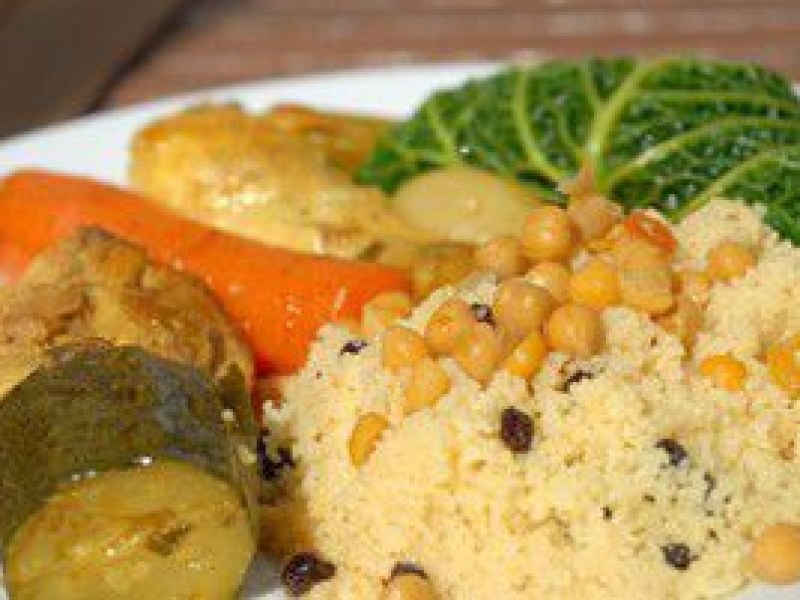
Presentation of couscous with 7 vegetables:
In a large hollow dish arrange the


A question? A Michelin-starred chef answers you!
Share your experience, ask for advice — Chef Patrick and our community are here to help.