1 Peel the Jerusalem artichokes, then cut them into large chunks and cook in the milk. Season with salt and pepper, add a pinch of fresh thyme and a bay leaf. Cook for 20 minutes at a gentle simmer. Drain, then pass through a food mill to get the same consistency as traditional mashed potatoes. Stir in the olive oil and the 2 peeled garlic cloves, finely chopped, then keep warm.
2 While the Jerusalem artichokes are cooking, trim the beets and cut them into julienne (matchsticks) the same way you did for the celeriac. Keep warm together with the celeriac.
3 Pour a little oil onto a plate, season with salt and pepper. Place your venison medallions in this seasoned oil, then coat them in the crushed white pepper and set aside.
4 In a sauté pan, heat the butter with a little oil. When it's very hot, sear your venison medallions for 2 minutes on each side, then remove them and keep them warm, covered with aluminum foil.
5 Remove a little of the cooking butter, return the sauté pan to heat, deglaze the pan with cognac, then flambé (keep a cloth handy to cover the pan if the flames get too high). Add the heavy cream and let reduce by half. Add the veal stock and reduce for another 2 minutes. Adjust the seasoning, add the mustard, and strain through a fine sieve. Keep the sauce warm in a bain-marie.
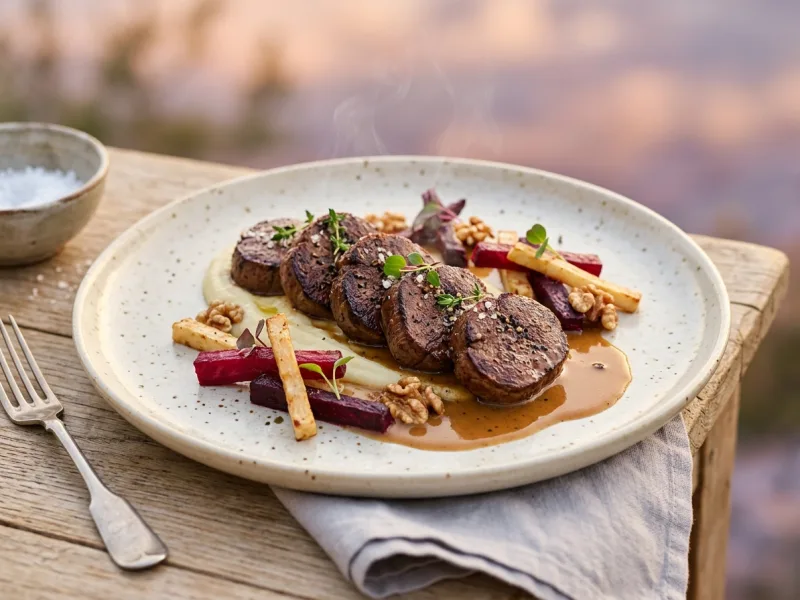
6 Presentation: Return your venison medallions to a hot oven for 2 minutes. Add a drizzle of olive oil and a grind of pepper to the celeriac and beets, then toss gently. On each warm plate, place a venison medallion lightly coated with sauce and sprinkled with walnuts on one side. On the other side, arrange a beautiful rosette of Jerusalem artichoke purée topped with the celeriac and beet fries layered together. Serve the venison medallions hot with the sauce on the side. This classic recipe is guaranteed to impress with its original garnishes. You can also make this with young wild boar loin (equally delicious), simply increasing the cooking time to 5 to 6 minutes on each side.












Help other cooks
Share a tip, your adaptation, your result. Every comment counts.