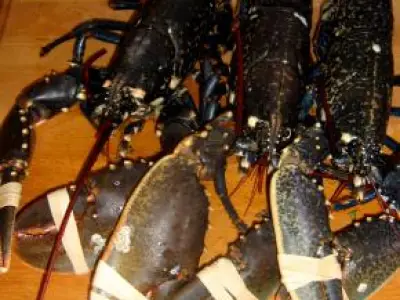
1 To cut up the lobster, try to do it as quickly as possible or blanch the lobster for 1 minute. Hold the lobster firmly, split it open between the eyes, then cut off the claws first at the shell level and give a firm blow with the flat of the knife to crack them. Next, cut the tail into 6 pieces at the ring joints and finally split the body in half lengthwise. Remove the sandy sac in the top of the head, then use a soup spoon to extract the creamy (green) part in the center called the coral and place it in a small bowl.
2 In a fairly large pot, heat the olive oil, then when it's smoking, add the lobster pieces, salt and pepper them. When everything turns a nice red color, flame with your Cognac and using a skimmer, remove the pieces onto a separate plate.
3 In the pot where you just seared your lobster pieces, soften the sliced onions, then the shallots and garlic, the lemon thyme and finally the tomato paste. After 5 minutes of braising covered, add the white wine, fish stock (or the same amount of water) and the chopped tomatoes, tarragon, salt and a pinch of Cayenne pepper or Spanish piment powder.
4 Immerse the lobster pieces (claws and body) so they are completely covered by the liquid for 10 minutes, then add the tail rings and cook for another 10 minutes at a gentle simmer.
5 Carefully remove the lobster pieces and transfer them to a large deep pot.
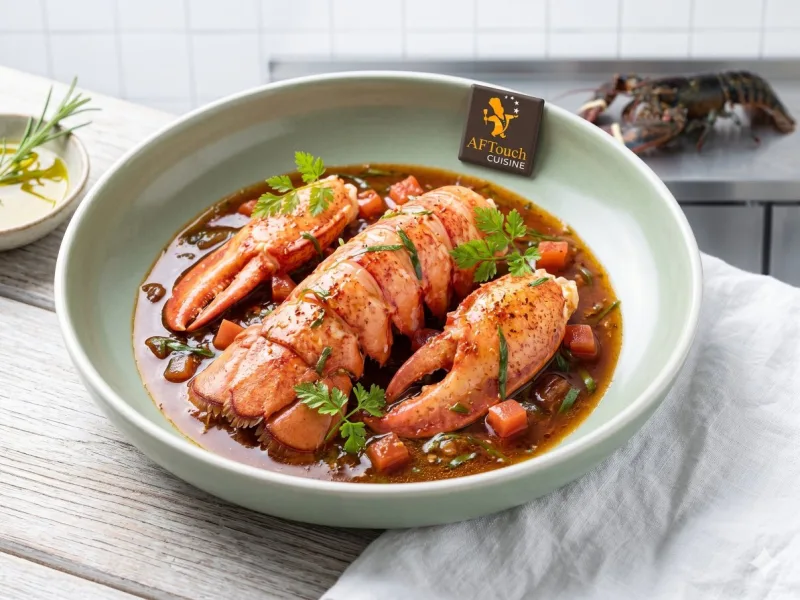
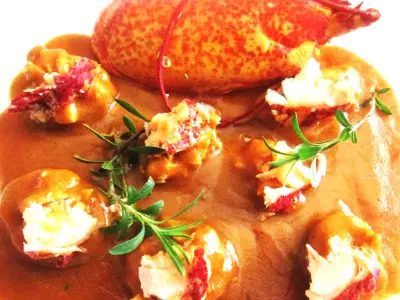
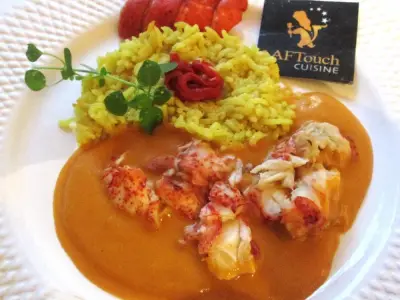
6 To the coral you set aside earlier, add your soft butter and flour and mix together with a wooden spatula until compact, then pour everything into the sauce, whisk well and blend. Bring to a boil, add the chopped chervil then strain through a fine sieve over the lobster pieces. Taste and adjust the seasoning, then serve with good pilaf rice, which I believe is its best accompaniment. For me, the most suitable wines to serve alongside are for example a Meursault or a fine white Hermitage, and if you really want to go all out, there are those rare intimate dinners where a Montrachet or Romanée-Conti has been served, but that's in the realm of dreams.






Help other cooks
Share a tip, your adaptation, your result. Every comment counts.